Downham Skip Hire Health & Safety Policy
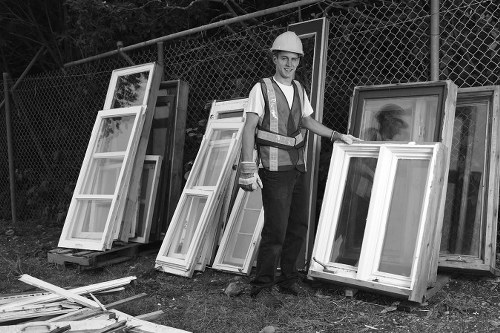 Downham Skip Hire is committed to providing a safe working environment for employees, contractors, and the public while delivering professional skip hire and rubbish removal services. This health and safety policy sets out the principles that guide our waste collection, skip delivery, and rubbish disposal operations. Safety is integral to every job, from vehicle movements to site clearance and loading skips.
Our objective is to prevent accidents, ill health, and damage to property by following recognised standards in waste management and skip hire services. All personnel must understand and apply these standards in daily activities. Compliance with statutory obligations and good practice forms the baseline of our approach, and we continually seek to improve operational safety across all our rubbish company services.
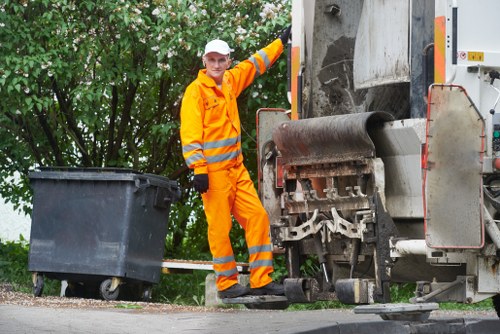 The responsibilities for maintaining safety are shared across the organisation: managers must ensure risk controls are in place, supervisors must monitor safe working, and staff must work safely and report hazards. Key responsibilities include:
- Implementing and reviewing risk assessments for skip placement and removal.
- Ensuring safe loading procedures to prevent manual handling injuries.
- Maintaining vehicle safety checks and secure transportation of waste.
Scope, Risk Control and Operational Standards
Our policy covers skip delivery, on-site waste collection, transfer to licensed facilities, and interactions with third-party contractors. The scope also includes the use of lifting equipment, vehicle operations, and the management of hazardous materials encountered during rubbish collection. We apply a hierarchy of controls: eliminate where possible, substitute, use engineering controls, adopt safe systems of work, and provide personal protective equipment (PPE).
All skip hire operations require pre-job planning, including site surveys to identify obstructions, underground services, and pedestrian or traffic flows. Drivers and operatives must follow loading limits and segregate recyclable materials to reduce manual handling and environmental risk. Consistent application of these practices reduces incidents and ensures responsible rubbish disposal.
 Emergency procedures are in place for incidents such as spillage, vehicle collisions, or discovery of hazardous waste. Staff must be trained to isolate the area, notify the supervisor, and follow incident reporting protocols. Reporting and recording incidents allows us to perform root-cause analysis and prevent recurrence, reinforcing our position as a reliable skip hire and waste management operator.
Training, Competence and Equipment
Training and competence are essential. Induction training is provided to all new staff, covering safe loading, manual handling, use of PPE, and the recognition of hazardous materials. Ongoing training addresses vehicle safety, traffic management at collection sites, and changes in waste regulations. Supervisors complete additional training in risk assessment and incident investigation.
All vehicles and lifting equipment are subject to regular maintenance and inspection. Pre-shift vehicle checks must be documented, and any defects reported immediately. We maintain clear procedures for the safe placement of skips to avoid damage to underground utilities and reduce public risk. Equipment integrity is a critical control in preventing accidents during rubbish removal activities.
Where work requires specialist handling of hazardous wastes, only accredited personnel and licensed contractors will be used. Our waste handling procedures comply with recognised waste transfer and disposal practice, ensuring responsibly managed waste collection and recycling where possible.
Monitoring, Review and Continuous Improvement
 Performance is monitored through regular audits, site inspections, and safety meetings. Key performance indicators include incident rates, near misses, and compliance with vehicle and equipment checks. Data-driven review informs updates to procedures and training, promoting a culture of continuous improvement across our rubbish company operations.
We encourage all staff to actively participate in safety; reporting near misses and suggesting improvements are part of everyday responsibilities. Risk assessments are live documents, revised after any significant change in operations or following an incident. Accountability at all levels ensures that the policy is lived, not just documented.
 This policy is supported by documented procedures, risk assessments, and training records which are available internally to staff. Regular policy reviews ensure alignment with current legislation and evolving best practice in skip hire, waste collection, and rubbish removal. By prioritising health and safety, we protect people, meet our regulatory obligations, and maintain high-quality, dependable skip hire services for all customers.